How Mamuci’s Commercial Forestation Lifts Communities and Landscapes Together
Mamuci is building a future where forests are not a cost centre but a profit engine that lifts entire communities out of poverty. By treating commercial forestation as a serious business activity, and by structuring benefits and partnerships carefully, Mamuci is showing that restoring land can be one of the fastest routes to restoring livelihoods.
Commercial forestation as a real business
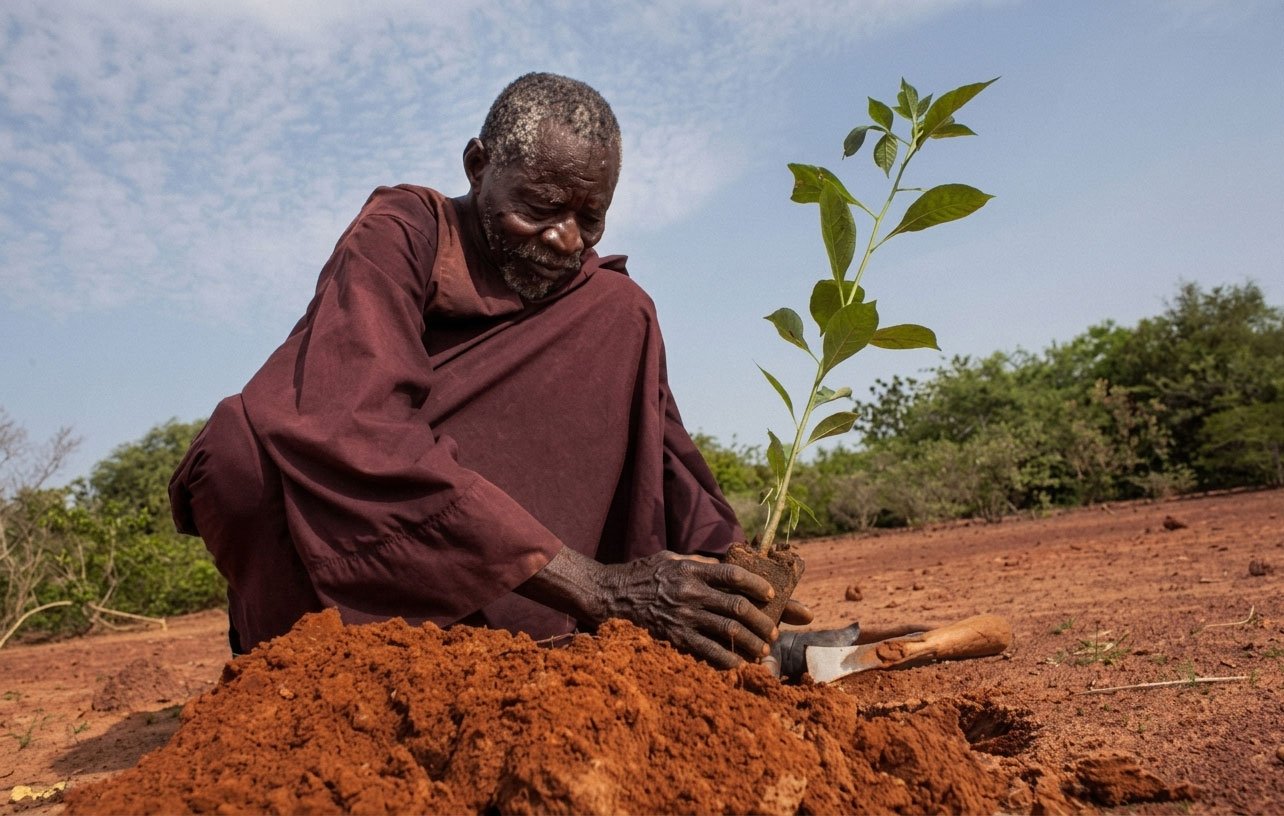
Mamuci does not plant trees to tick a sustainability box. Commercial forestation is a core business unit, because trees are productive assets that feed directly into an integrated agro‑industrial model. Every hectare is planned like an orchard or a factory line: which species are planted, which products will flow, what the cash‑flow profile looks like, and who earns from it over time.
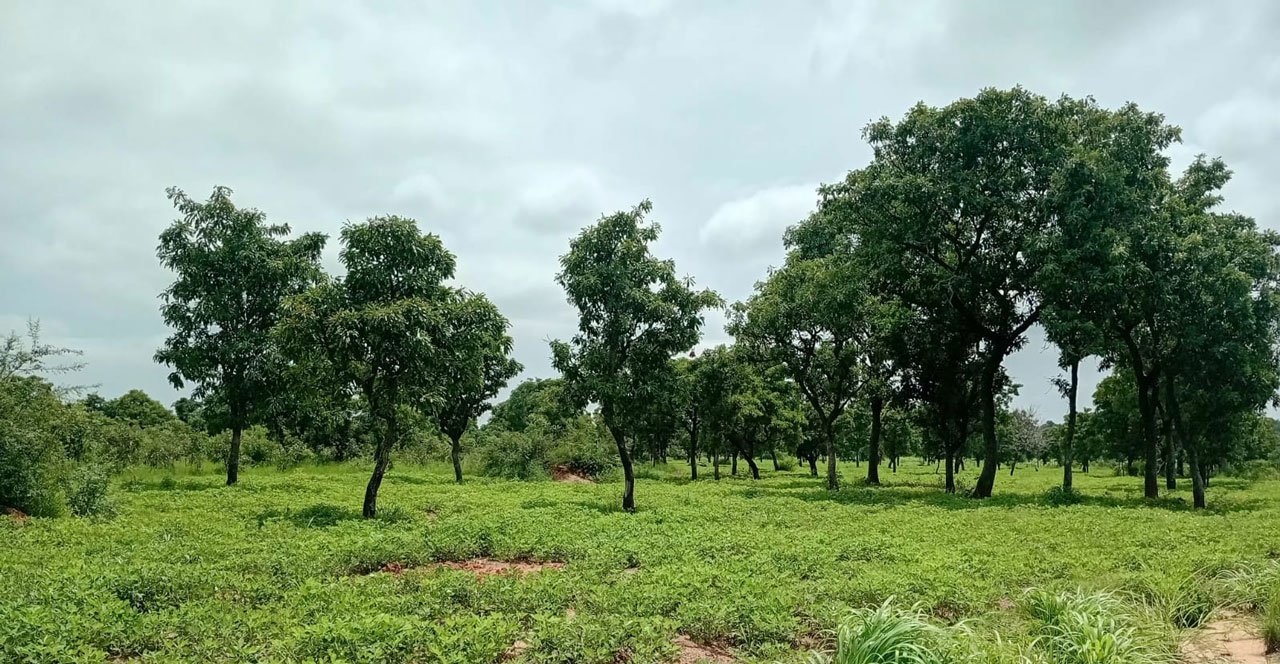
Forest landscapes are built around high‑value species and mixed systems that generate nuts, oils, fruits, honey, timber, biomass and ecosystem services. This underpins multiple value chains, from shea and honey to wood products, soil enhancers and emerging bio‑based materials. Reforestation becomes a disciplined, revenue‑generating enterprise with clear business logic, not a one‑off campaign driven by donations or short‑term projects.
Because the industrial model depends on the long‑term health of these landscapes, every decision is taken with both ecological and financial value in mind. Commercial forestation supplies raw materials, stabilises production and reduces risk across the wider Mamuci system.
Turning back desertification and growing resilience
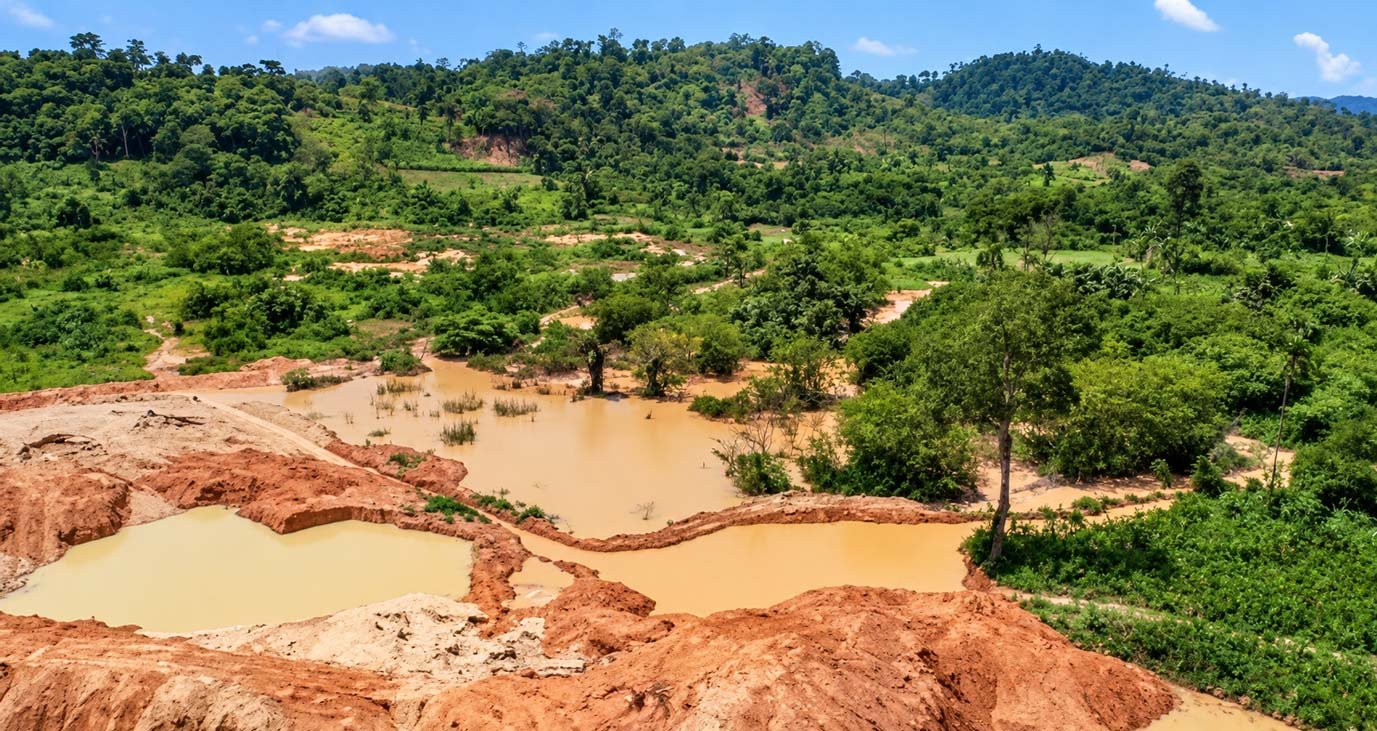
Across the savannah and Sahelian transition zones, the land is under growing pressure from rising temperatures, erratic rainfall, bushfires and extractive land use. When tree cover disappears, soils degrade, water runs off instead of soaking in, and farms become more vulnerable year after year. Desertification appears in failed crops, drying streams and households pushed to the edge.
Mamuci’s tree‑based systems directly counter this trend. Trees anchor the soil, shade crops and create cooler, more humid microclimates that help farms survive long dry spells. Deep‑rooted species help recharge groundwater, while leaf litter and prunings rebuild soil organic matter. Every hectare of restored tree cover delivers three dividends at once: commercial products, climate resilience and a buffer against the southward creep of the desert.
By embedding trees into farms, field boundaries and dedicated woodlots, vulnerable drylands are turned into productive, climate‑smart landscapes. The more commercially successful these plantings become, the stronger the contribution to dedesertification and regional stability.
Industry inside a living landscape
The Mamuci concept is to build industry that depends on healthy ecosystems instead of exhausting them. Facilities such as processing plants, storage, nurseries and training centres are designed as nodes within a wider productive landscape, not as isolated sites that simply extract raw materials.
In this system, so‑called waste is treated as a misplaced resource. Shells, husks, sawdust and prunings become inputs for biochar, soil amendments, energy and wood‑based materials. This circular approach reduces pressure on natural forests, enhances farm productivity and creates new revenue streams for farmers and communities. The trees supply the factories, and the factories create the incentives, finance and markets needed to protect and expand tree cover.
Benefit‑sharing built on clear agreements
Commercial forestation only has integrity if the people who live with the trees see fair, predictable benefits over time. Mamuci therefore works with formal Benefit‑Sharing Agreements that align with national frameworks and accepted standards, rather than relying on vague promises that cannot be sustained or enforced.
Each project area is governed by a written agreement that defines the roles and responsibilities of Mamuci, landowners and participating farmers, as well as how revenues from tree products are shared once they begin to flow. These agreements set out in advance which benefits are wages for work done, which are land‑based entitlements, and which are linked to performance, such as successful fire control or tree survival rates.
In the interests of transparency, Mamuci is careful not to exaggerate the short‑term income that tree planting can provide. The early years are mainly about paid work such as nursery operations, site preparation, planting and maintenance, while the larger returns from timber, nuts or other long‑cycle products come later. By putting these realities into writing, and by updating agreements when needed, trust is built on clarity rather than wishful thinking.
CSR that builds community assets
Mamuci’s Corporate Social Responsibility is guided by a simple principle: responsible business must help build stronger communities, not just stronger brands. CSR efforts are therefore weighted toward facilities and services that improve quality of life for local people, even where they do not directly benefit Mamuci’s operations.
This includes support for living infrastructure such as community health facilities, school improvements and learning spaces, digital and communications access, and recreational areas where young people and families can gather safely. These are the foundations of long‑term human development and social cohesion.
Alongside this, Mamuci recognises that communities need opportunities to build skills and human capital. A focused share of CSR resources supports training, youth development and community learning, helping people participate more confidently in local enterprise, leadership and future livelihoods. The goal is that CSR leaves behind durable value: places where people can learn, heal, connect, play and grow, independent of any single project cycle.
A replicable model for West Africa
What Mamuci is building in Ghana’s Savannah Region is designed to be more than a local success story. It is a model that can be adapted across the wider West African subregion, where many communities face the same combination of land degradation, climate stress, youth unemployment and under‑valued tree resources.
The Mamuci concept is replicable because it is modular. The reforestation platform can be tailored to different keystone species, the agro‑industrial components can be scaled to local realities, and the partnership and benefit‑sharing structures can be aligned with customary authorities and national regulations. The result is a practical blueprint: commercial forestation that is bankable, fair and rooted in local livelihoods while contributing to climate resilience and dedesertification across the region.
As the climate tightens its grip on West Africa’s drylands, the question is no longer whether forests matter, but whether they can be made central to the region’s economic renewal. Mamuci’s model answers that question with a clear yes, proving that when forests pay their way, whole communities can rise with them.