Why Circular Agro-Industrial Hubs Are the Next Step for the Ghanaian Savannah
 Across Ghana’s Northern Savannah, farmers already produce cereals, livestock, shea and other tree crops that are essential to the national food system. Yet the region remains structurally poor, with weak processing capacity, high post-harvest losses and limited rural industry capturing value close to where it is created.
At Mamuci, the next step is not simply more production but a different kind of system: circular agro-industrial hubs that turn the Savannah’s raw potential into lasting, locally anchored prosperity.
The Savannah’s Structural Gap
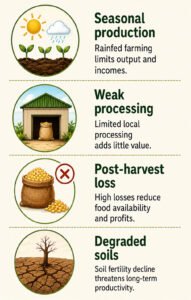 For decades, the Savannah has existed at the intersection of opportunity and neglect.
Production is highly seasonal and vulnerable to climate shocks. Processing is fragmented or absent, so value leaks out between field and market. Organic waste from crops, livestock and tree crops is under-used, even as soils degrade and rainfall becomes less reliable.
National initiatives increasingly recognise that upgrading value chains in the savannah is essential for food security, macroeconomic stability and employment. Yet interventions often target single commodities or isolated plants. The result is a landscape dotted with projects rather than a coherent rural economy.
Mamuci was created to help close this structural gap: to link regenerative production, modern processing and landscape restoration in one integrated system.
What Mamuci Means by Circular Hubs
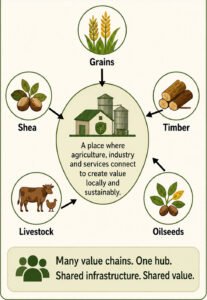
When Mamuci talks about circular agro-industrial hubs, this is not an abstract concept. It is a physical cluster of facilities in the Savannah where production, processing and restoration reinforce one another.
Within such a hub:
- Multiple value chains – grains, shea, timber, livestock and oilseeds – share infrastructure such as energy, water, storage, drying and logistics.
- By-products from one process become inputs for another: husks, shells and sawdust feed boilers or biochar kilns; organic effluent becomes biogas; manure and compost flow back to fields as soil amendments.
- Industrial operations are anchored in surrounding communities, with clear roles for farmers, women’s groups and youth enterprises in ownership and value creation.
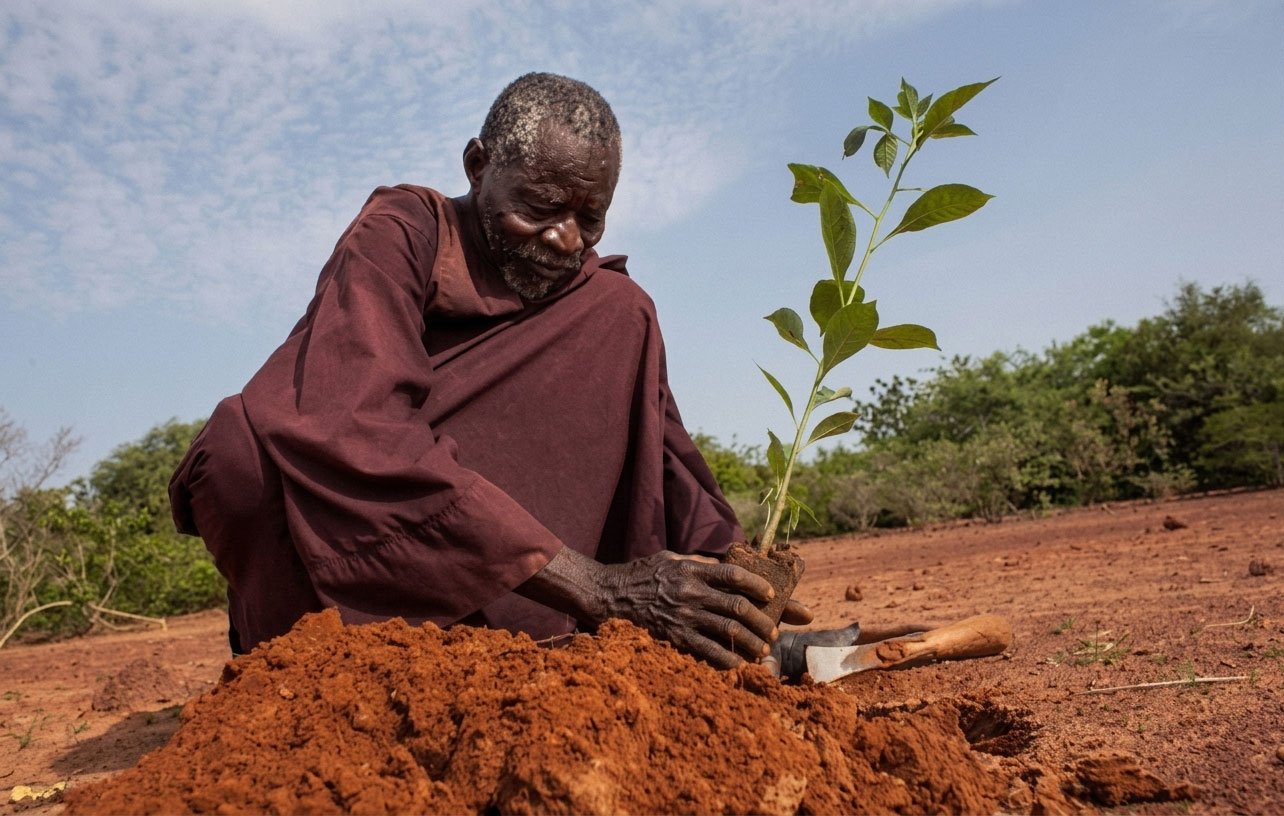
This same logic sits behind Mamuci’s forestry work at Yerada, its model shea landscapes and its interest in biochar and regenerative farming: nothing on the landscape should be treated as waste if it can feed another productive cycle.
Why the Savannah Is the Right Place
The Savannah is not just where Mamuci happens to work; it is precisely where this model makes the most sense.
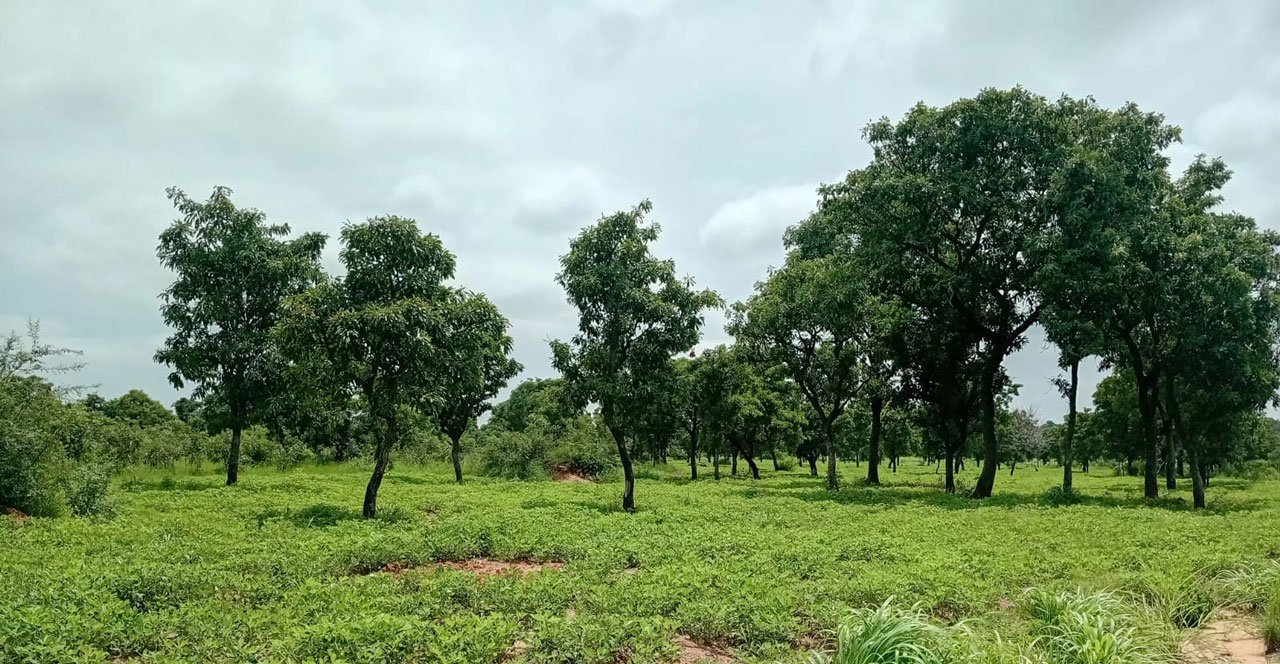
The region is already a major source of staple crops and livestock for Ghana. It lies at the heart of the shea belt, where tree resources underpin women’s incomes and export earnings. It also contains large areas of degraded land that can be restored through commercial forestry, assisted natural regeneration and climate-smart agriculture, without pushing deforestation further south.
At the same time, the Savannah suffers from under-investment in infrastructure, limited access to finance for processors, and high poverty and youth unemployment. This combination of resource richness and structural deficit is exactly where circular hubs can do the most good.
From Linear Chains to Circular Landscapes
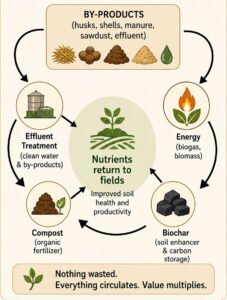 Traditional agro-industrial zones often replicate a linear logic: raw materials in, products out, waste discarded. Mamuci’s design principle is different.
Around each future hub, the aim is to:
- Capture crop residues, nut shells, fruit skins and sawmill offcuts as feedstock for energy, bio-fertilisers and bio-based materials, rather than burning or dumping them.
- Return organic matter and nutrients to the land through compost, biochar-enriched amendments and improved grazing systems, improving soil structure and resilience to drought.
- Use shared cold rooms, warehousing and drying facilities to reduce post-harvest losses that erode farmer incomes and national food security.
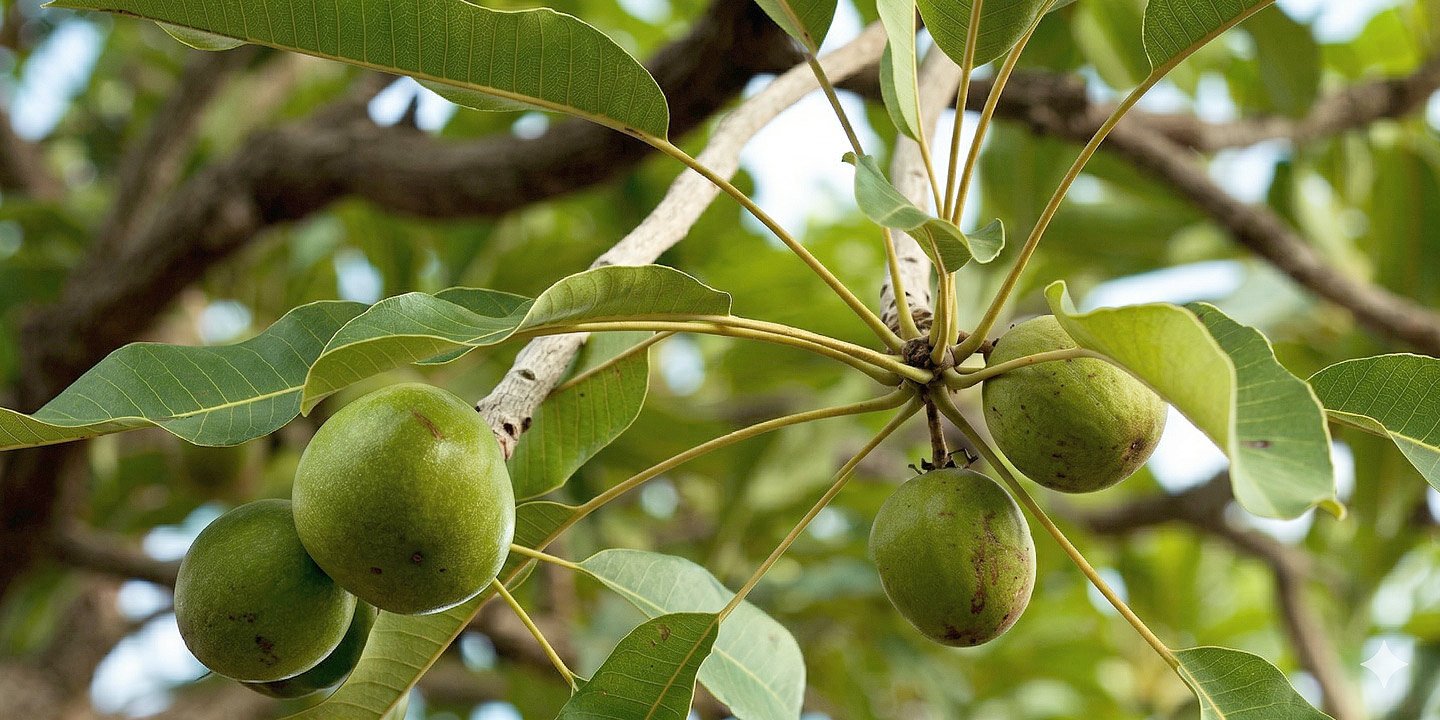
The forestry and shea models plug into the same circle: timber plantations protect water and soils while supplying wood; shea parklands anchor biodiversity and women’s incomes; and processing hubs transform these resources into higher-value products in the Savannah, not thousands of kilometres away.
The Development Case for Ghana
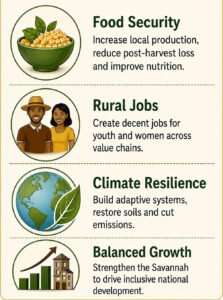
For Ghana’s policymakers, financiers and development partners, circular agro-industrial hubs in the Savannah offer a practical way to deliver on four national priorities:
- Food security and import substitution are achieved by processing close to production zones and supporting competitive, locally made foods and ingredients.
- Jobs and rural industrialisation, by creating demand for operators, technicians, transporters, service SMEs and agro-service providers beyond seasonal farm labour.
- Climate resilience and landscape restoration, by backing climate-smart practices—dynamic agroforestry, soil regeneration and efficient water use—across entire landscapes, not just individual farms.
- Balanced national growth by investing in the Northern Savannah as a strategic engine for reducing regional inequality and strengthening macroeconomic resilience.
 Mamuci’s contribution is to design and operate hubs that make these goals real on the ground—linking commercial returns with ecological integrity and shared wealth.
Making Circular Hubs Real
Circular agro-industrial hubs do not emerge on their own. They require spatial planning, blended capital and long-term partnerships between communities, the private sector and the state. They also require discipline: the discipline to design for circular flows of materials and value from the outset, rather than trying to retrofit green elements later.
At Mamuci, this model is being built step by step in the savannah – through forestry at Yerada, through model shea landscapes, and through the processing capacity that will anchor future hubs. ‘Circular agro-industrial hubs’ are not a slogan but the next practical step in turning degraded savannah into shared, generational wealth.