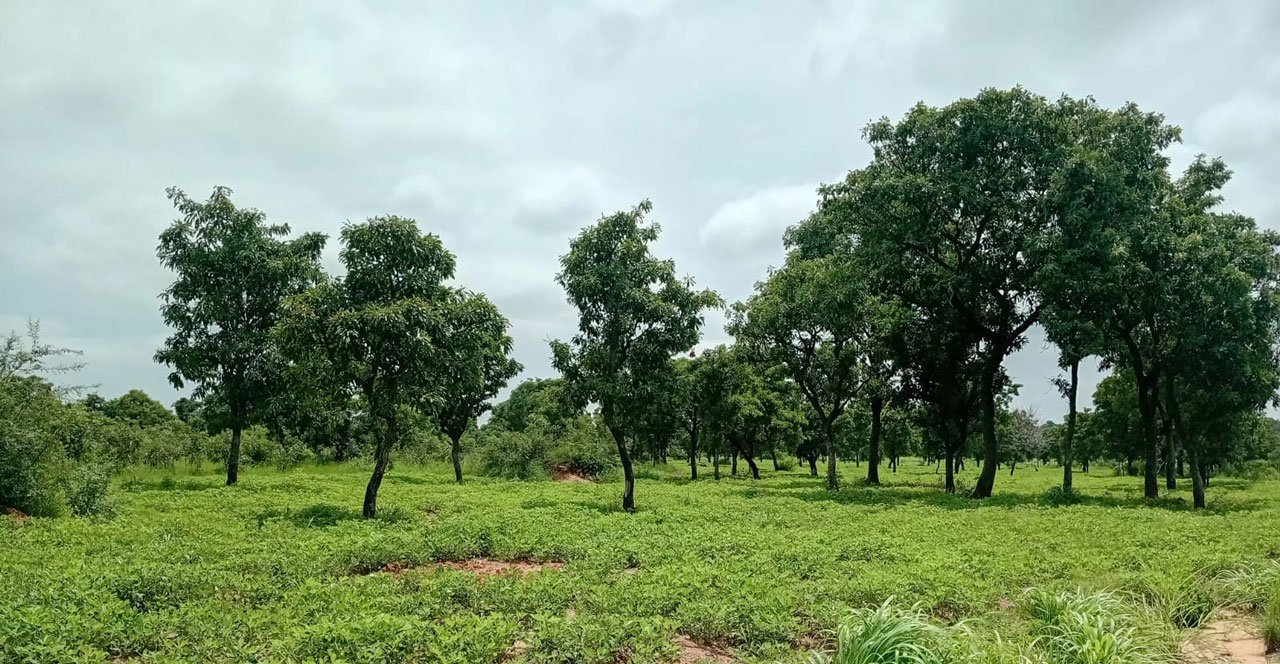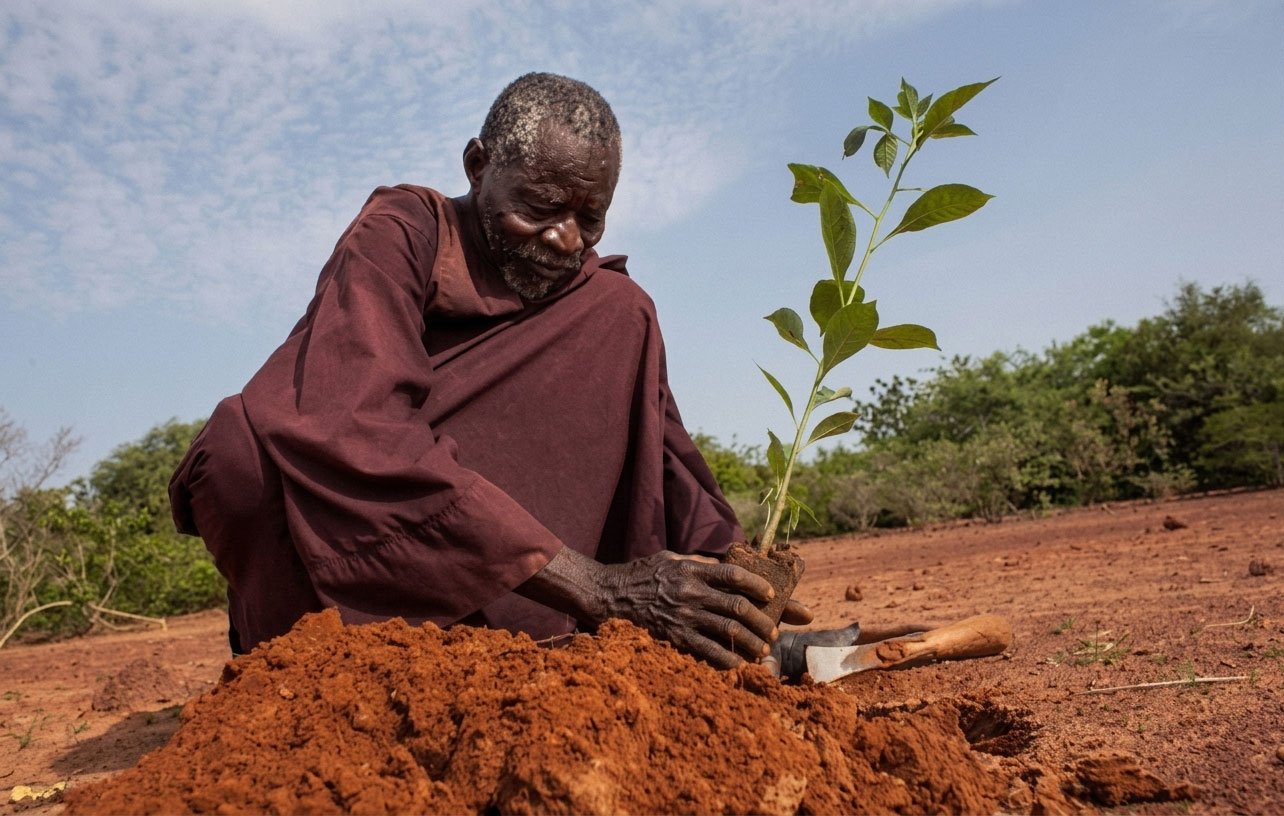
In the drylands of northern Burkina Faso, farmer Yacouba Sawadogo showed the world that yesterday’s wisdom can solve today’s crises. Reverting to and refining traditional planting pits known as zaï, he transformed exhausted soils into productive agroforestry systems, challenging the assumption that degraded land was beyond redemption and revealing the depth of inherited knowledge in his community.
At Mamuci, we see our own work in commercial reforestation as building on this lineage, applying the same principles of patience, precision, and respect for local ecologies to a larger, timber‑focused landscape. Our primary remit is commercial reforestation with a basket of timber species, both indigenous and exotic, and we are determined that these future forests be productive, ecologically grounded, and socially meaningful. In this context, zai pits are a cost‑effective technology for establishing trees and intercrops on marginal land. By concentrating water and nutrients where they are needed, zai pits help young timber seedlings establish in conditions that would defeat conventional planting.
Zai pits are small basins dug into compacted soil, partially filled with organic matter and used as precision planting sites for seeds and nursery‑raised seedlings. When rains fall, each pit captures run‑off, slows it, and channels it into the root zone, while the organic matter feeds soil life and provides a steady release of nutrients. Across drylands, farmers and engineers are developing a whole family of rainwater‑harvesting structures – from these small planting pits to larger contour bunds, half‑moons, and engineered channels – all designed to slow, spread, and sink water into the soil. Zai pits act as micro‑catchments at plant scale, while stone bunds, half‑moon pits, contour trenches and similar structures work at field scale; together, they create a “slow‑it, spread‑it, sink‑it” system in which larger structures slow and spread water and zai pits hold it exactly where young tree roots can use it.
Experience from the Sahel and East Africa shows how powerful this combination can be. On degraded land in Burkina Faso, zai systems used with contour earthworks have more than doubled grain yields, while trials elsewhere have recorded strong improvements in crop establishment, biomass, and resilience when pits are enriched with organic amendments.
Commercially, Mamuci must also consider cost per hectare and return on investment. Higher survival rates for timber seedlings mean less loss, fewer replacements, and more uniform stands over time, while improved early growth can translate into shorter rotations or higher volumes at harvest. Zai pits can also host short‑cycle intercrops such as legumes, fodder, or food crops, generating interim income and biomass while the timber trees mature so that a single intervention underpins both long‑term forestry and short‑ to medium‑term cash flow.
To make zai pits viable on thousands of hectares, Mamuci will use modern machinery that respects the logic of zai while greatly increasing efficiency. Tractor‑mounted or towed implements can punch or auger pits along pre‑marked, GPS‑guided lines that match our silvicultural designs, delivering the spacing and alignment our forestry blocks require. Deep‑tillage tools (rippers and subsoilers) can be fitted with scoops to form micro‑basins at speed, while lighter equipment or two‑wheel tractors serve steeper or more sensitive areas where a gentler touch is needed.
Mechanisation allows us to combine several operations in a single pass. Attachments can place measured doses of compost, manure, or blended amendments directly into each pit as it is formed so that planters follow behind with nursery seedlings and place them into a fully prepared micro‑site. As biochar production scales, we will add biochar to this mix, building a durable, carbon‑rich matrix beneath each tree that strengthens soil structure, holds nutrients, and retains moisture. This precise, efficient approach keeps labour costs under control while preserving the biological advantages that make zai pits so effective for establishing timber plantations.
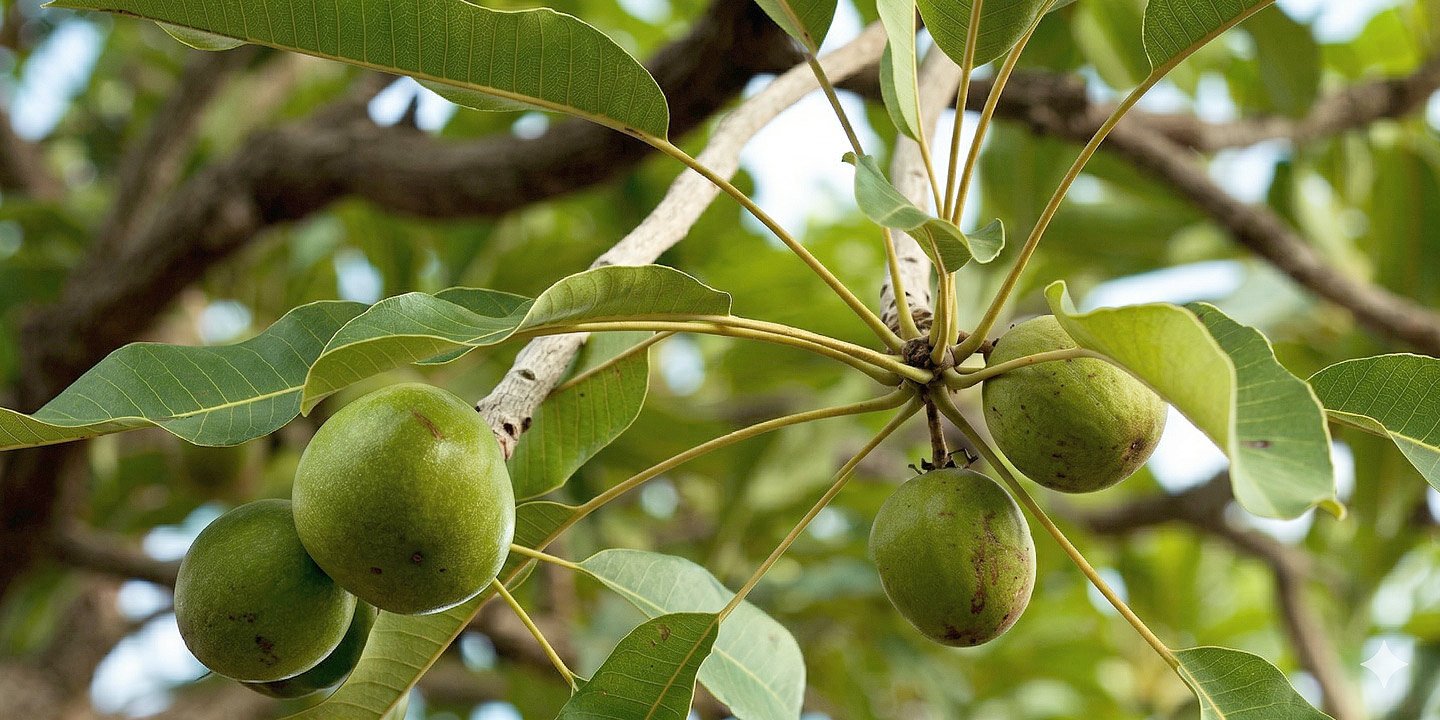
Skilled people in the field remain essential. Machines shape pits and deliver inputs, but experienced teams oversee species selection, seedling quality, planting timing, and the integration of existing shea and other native species so that productivity and ecological integrity advance together. Our model combines operators, field supervisors, and local workers: machinery handles repetitive heavy work, while people bring judgement, local knowledge, and continuous adaptation.
Ultimately, the story we want Mamuci’s forests to tell is one of continuity and evolution. The same logic that helped farmers in the Sahel reclaim their land can be applied to build commercially viable, regenerative forestry landscapes in northern Ghana. We hope to co‑create a culture of stewardship in which the land is not merely used but actively healed. By combining zai pits, biochar, modern machinery, and a diverse basket of timber and associated species, Mamuci aims to demonstrate that large‑scale reforestation can be financially robust, technically sound, and deeply respectful of the wisdom that came before us.